Real Cricket Swipe Settings: The Definitive Guide to Mastering Batting & Bowling 🏏
Unlock the full potential of your gameplay with this exhaustive, data-driven guide to Real Cricket swipe mechanics. Whether you're a casual player or aspiring to be on the leaderboards, perfecting your swipe settings is the key to consistency and high scores.
Last Updated:
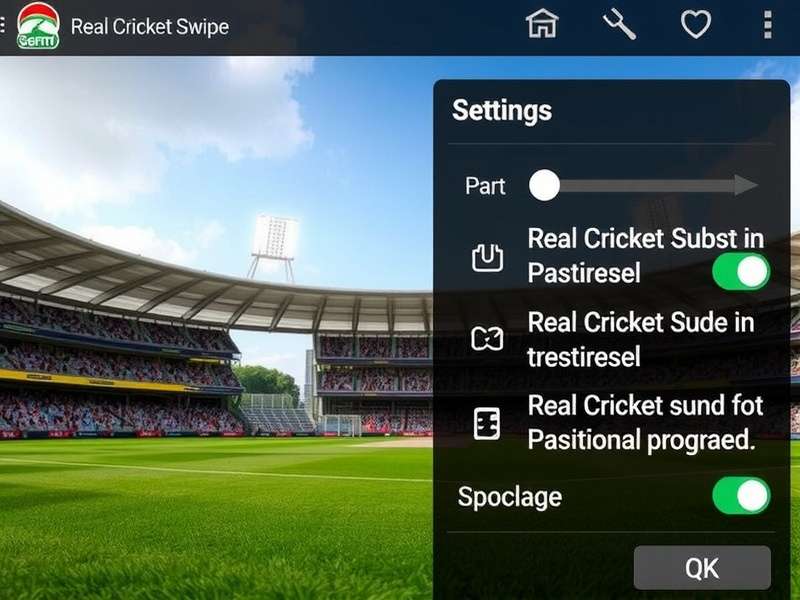
Understanding the Core Swipe Mechanics
The swipe control system in Real Cricket is deceptively simple on the surface but harbors immense depth. Unlike button-mashing games, cricket simulation requires finesse, timing, and spatial awareness. The game translates the direction, speed, length, and angle of your finger swipe into a corresponding cricket shot or delivery.
The Physics Behind the Swipe
Every swipe generates a vector. The game's engine calculates this vector's properties to determine the outcome. A fast, straight swipe down the pitch might result in a powerful drive, while a slight, late flick to the leg side could produce a delicate glance. This system allows for an astonishing variety of shots and deliveries, mirroring the real sport's complexity.
For instance, the Consignment Sprint Star game also uses vector-based controls, but Real Cricket's implementation is far more nuanced, requiring muscle memory for different pitch conditions and bowler types.
Optimizing Your Swipe Settings for Your Playstyle
One size does not fit all. The default settings are a baseline. Tweaking them can drastically improve your performance.
Sensitivity Calibration Tool (Conceptual)
Think of sensitivity as the "zoom level" of your control. Lower sensitivity (e.g., 30-50%) is great for beginners—it forgives small errors and promotes controlled shots. High sensitivity (70-100%) is for experts, allowing for lightning-fast late cuts and aggressive hooks, but it demands pixel-perfect precision.
Pro Recommendation: Start at 60%. Increase by 5% increments once you feel comfortable. If you find yourself constantly edging to the keeper or bowling wides, dial it back.
Dead Zone and Trajectory Assist
The "dead zone" setting determines how much initial finger movement is ignored. A larger dead zone prevents accidental swipes when you're just repositioning your thumb. "Trajectory Assist" (on by default) subtly corrects your swipe path to align with realistic shot trajectories. Turning it off grants total control but is only for the most seasoned players, much like the hardcore mode in Mapusa Galactic Conquest.
Batting: Deconstructing the Perfect Swipe
Batting in Real Cricket is an art form. Let's break down the major shot categories.
Front Foot Strokes
Drive: A straight, firm swipe from the batter's icon towards the bowler. Length determines power. A full-length swipe goes for the boundary, a half-length swipe looks for a quick single. The timing must be impeccable, especially against faster bowlers—a lesson players of Avengers Power Struggle would appreciate in their combat timing.
Back Foot Strokes
Cut & Pull: Angle is everything. A square cut requires a sharp, horizontal swipe away from the body as the ball passes. The pull shot uses a diagonal swipe from shoulder height down towards mid-wicket. The common mistake is swiping too early; wait for the ball to come to you.
Bowling: Precision and Deception
Bowling is about repeatability and variation. Your swipe dictates line, length, pace, and spin/swing.
Pace Bowling Swipe Patterns
A fast, straight-down swipe delivers a good-length ball on off stump. To bowl a yorker, your swipe must be very fast and end precisely at the batter's toes icon. For a bouncer, swipe fast but with a pronounced upward curve at the end. The consistency needed is similar to mastering the rapid turns in Tornado Dash Warriors.
Spin Bowling: The Art of the Flick
Finger spin (off-spin) uses a clockwise rotational flick at the end of your swipe. Wrist spin (leg-spin) uses an anti-clockwise flick. The tightness of the rotation affects the amount of turn. A subtle, late flick can produce a devastating googly or doosra that baffles the batter.
Search Guide
Can't find a specific tip? Search our entire gaming guide database.
Rate This Guide
How helpful was this guide for you?
Share Your Tip
Have a unique swipe setting? Share it with the community!
Advanced Pro Tips and Strategies
Reading the Pitch Conditions
A "green" pitch requires more defensive swipes early on, as the ball will seam more. On a "dry" pitch, anticipate more turn and swipe with the spin. Adjust your sensitivity down by 10% on challenging pitches for better control.
Mental Game and Rhythm
Just like in Heroic Path Racer where flow is key, establishing a batting rhythm is crucial. Don't swipe wildly every ball. Build an innings with soft hands, then explode. Watch the bowler's hand in the animation—it gives clues about length and pace.
Join the Daman Games Community
Your journey doesn't end here. Share your settings, ask questions, and compete in our weekly challenges. The path from novice to legend is paved with practice, smart adjustments, and community knowledge.